This website is managed by Ultima Markets’ international entities, and it’s important to emphasise that they are not subject to regulation by the FCA in the UK. Therefore, you must understand that you will not have the FCA’s protection when investing through this website – for example:
You will not be guaranteed Negative Balance Protection
You will not be protected by FCA’s leverage restrictions
You will not have the right to settle disputes via the Financial Ombudsman Service (FOS)
You will not be protected by Financial Services Compensation Scheme (FSCS)
Any monies deposited will not be afforded the protection required under the FCA Client Assets Sourcebook. The level of protection for your funds will be determined by the regulations of the relevant local regulator.
Note: UK clients are kindly invited to visit https://www.ultima-markets.co.uk/. Ultima Markets UK expects to begin onboarding UK clients in accordance with FCA regulatory requirements in 2026.
If you would like to proceed and visit this website, you acknowledge and confirm the following:
1.The website is owned by Ultima Markets’ international entities and not by Ultima Markets UK Ltd, which is regulated by the FCA.
2.Ultima Markets Limited, or any of the Ultima Markets international entities, are neither based in the UK nor licensed by the FCA.
3.You are accessing the website at your own initiative and have not been solicited by Ultima Markets Limited in any way.
4.Investing through this website does not grant you the protections provided by the FCA.
5.Should you choose to invest through this website or with any of the international Ultima Markets entities, you will be subject to the rules and regulations of the relevant international regulatory authorities, not the FCA.
Ultima Markets wants to make it clear that we are duly licensed and authorised to offer the services and financial derivative products listed on our website. Individuals accessing this website and registering a trading account do so entirely of their own volition and without prior solicitation.
By confirming your decision to proceed with entering the website, you hereby affirm that this decision was solely initiated by you, and no solicitation has been made by any Ultima Markets entity.
Ultima Markets does not have an establishment in Singapore and does not operate from Singapore.
Ultima Markets does not provide products or services to citizens or residents of Singapore, and account applications from Singapore citizens or residents will not be accepted.
If you are a citizen or resident of Singapore, please do not open an account or use Ultima Markets’ products or services.
By selecting “Acknowledge and Continue Browsing”, you confirm that you are accessing this website on your own initiative and that your access is not the result of any direct marketing, targeted advertising, solicitation, or promotional activity by Ultima Markets.
Nothing on this website constitutes an offer, solicitation, or promotion of products or services in any jurisdiction where such activity is prohibited. You are responsible for ensuring that your access to and use of this website complies with applicable local laws and regulations.
How Energy Prices, Debt Risk & Trade Wars Fuel Gold’s Next Rally?
How Energy Prices, Debt Risk & Trade Wars Fuel Gold’s Next Rally?
As of early September 2026, spot gold has navigated a volatile period, trading near $4,400 per ounce. It has rebounded more than 10% from a major low of $4,000, and this follows a long correction after hitting record highs of around $5,500 per ounce earlier in the year.
It seems gold is setting the stage for a long-term bullish trend after nearly 5 months of major correction. While the technicals point to a solid setup, the broader financial environment is currently defined by fragile risk sentiment, escalating Middle East tensions, looming energy supply threats, and stubborn inflation risks, which add fuel to the fire. However, with the Fed and other major central banks looking to tighten policies to curb inflation, can gold still shine under rising sovereign yields?
Ultima Markets will look from a different perspective at how this can create an advantage for gold.
Safe-Haven Gold May Return to Shine
Entering September, the market is facing many challenges. Middle East tensions, resurfacing inflation risks, and central banks returning to tightening all point to a headwind for global risk sentiment.
Furthermore, the notorious “September effect”—a seasonal period historically troubled by stock market drops and high volatility—increases the need for defensive portfolio positioning.
If the broader market sentiment turns sour this month, three major catalysts stand ready to drive a strong bullish reversal for gold: the Middle East conflict causing inflation, the growing US debt crisis pushing yields higher, and the unpredictable spillover damage from North American trade frictions.
1. Middle East and Energy Inflation Risk
Undoubtedly, from late August to early September, the ongoing geopolitical re-escalation in the Middle East has fundamentally changed the broad market picture. The inflation narrative could now dominate the rest of 2026, or at least until the US Mid-term elections in November.
As the conflicts sour broader market sentiment, the immediate casualty has been the stability of global energy supply chains, which threatens to push oil prices significantly higher. ·
This energy shock carries the risk of bringing inflation back with a vengeance. It creates a sticky, supply-driven price surge that central banks will find very difficult to control.
While gold is not always perfect, it is often considered a reliable inflation hedge in the short term.
The fear of a second wave of inflation significantly raises gold’s appeal as a premier wealth-preservation asset. It provides a critical hedge when currency purchasing power is under pressure.
2. Rising Yield and Debt Risk
In common economic theory, higher interest rates and rising yields heavily pressure non-yielding assets like gold. However, the current environment could potentially transform this dynamic into a structural bullish catalyst.
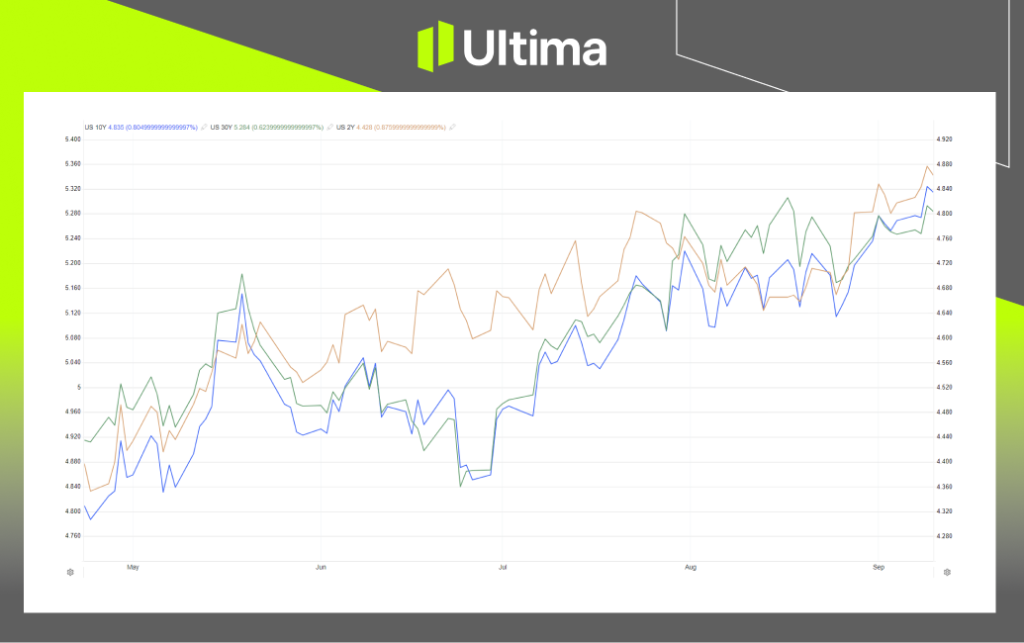
With the US Federal Reserve forced to maintain a “higher for longer” stance—or potentially even threatening further hikes to curb energy-driven inflation—rate-sensitive short-term yields, such as the 2-year and 3-month Treasuries, remain high.
The deeper, more systemic danger lies in the long end of the yield curve.
The US government is currently dealing with a massive, unprecedented debt burden. To successfully attract buyers for this continuous wave of heavy debt issuance, the Treasury is forced to offer higher interest rates.
This drives up the term premium and pushes long-term yields to multi-year and even decade highs.
This is no longer just a reflection of tight monetary policy; rising long-term yields now signal deep market anxiety over the United States’ fiscal sustainability, future long-term growth, and overall economic stability.
This structural debt risk could now trigger intense risk aversion. Rather than buying traditional government bonds, investors are increasingly likely to flock to gold as the ultimate safe haven.
3. US-Canada Trade War & extensional damage
While a US-Canada trade war might initially seem more regional and less threatening than the sweeping global impact of a US-China tariff battle, it does not mean there are no risks.
We never know when localized disruptions might spill over across broader global markets.
The primary uncertainty here is the potential for this friction to extend deeper into other economic sectors, even on a global scale. We never truly know when regional trade disputes will escalate or extended into other global trade routes.
One Isn’t Enough: 3 Signals Point to Gold’s Next Rally
To sum up, escalating Middle East tensions threaten global energy supplies, raising fears that higher oil prices could trigger a second wave of inflation and drive investors toward gold to protect their purchasing power.
At the same time, rising long-term Treasury yields reflect growing market anxiety over the massive US national debt, leading cautious investors to choose gold as a structural safe haven over traditional government bonds.
Finally, lingering trade war risks add further economic uncertainty, combining these multiple factors into a strong bullish catalyst for gold in this macro environment.
What’s Next for Gold, Technically?
From a technical perspective, the September 2026 price action offers a strong bullish entry following recent months of bearish correction and consolidation. With spot gold finding solid support near the $4,000 region, prices are deeply oversold on the daily timeframe and are approaching key structural support levels.
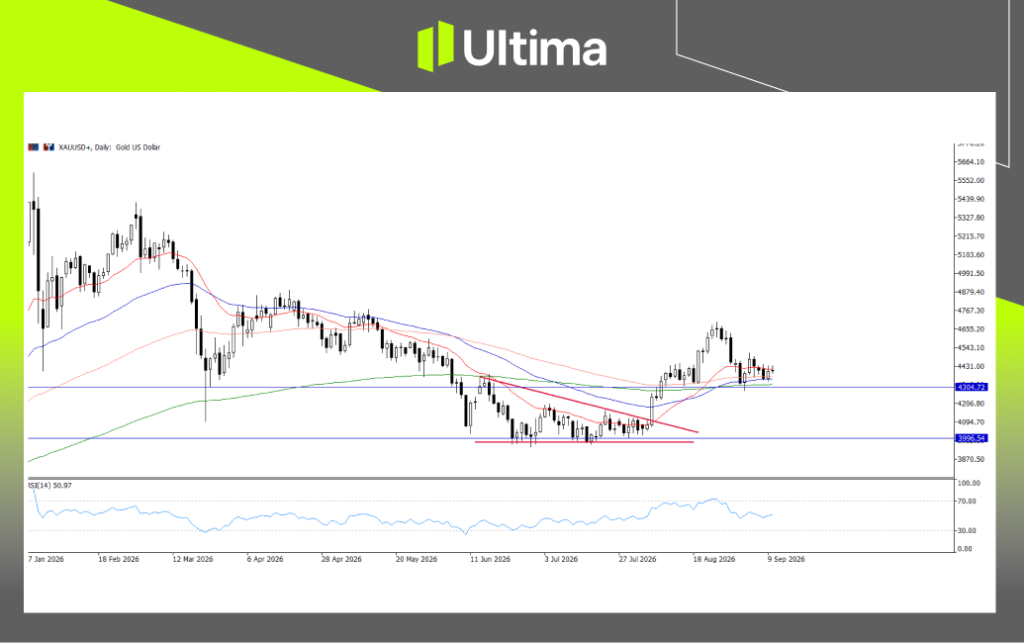
XAUUSD, Daily Chart | Ultima Markets MT5
Meanwhile, a sharp bullish breakout from the descending triangle on the daily chart near the $4,000 support suggests a bullish recovery from the prolonged bear market seen over the past 3 months.
With gold now regaining levels above $4,300, which coincides with the 200-day moving average, it suggests that gold has established a robust demand zone near the $4,000 – $4,300 area.
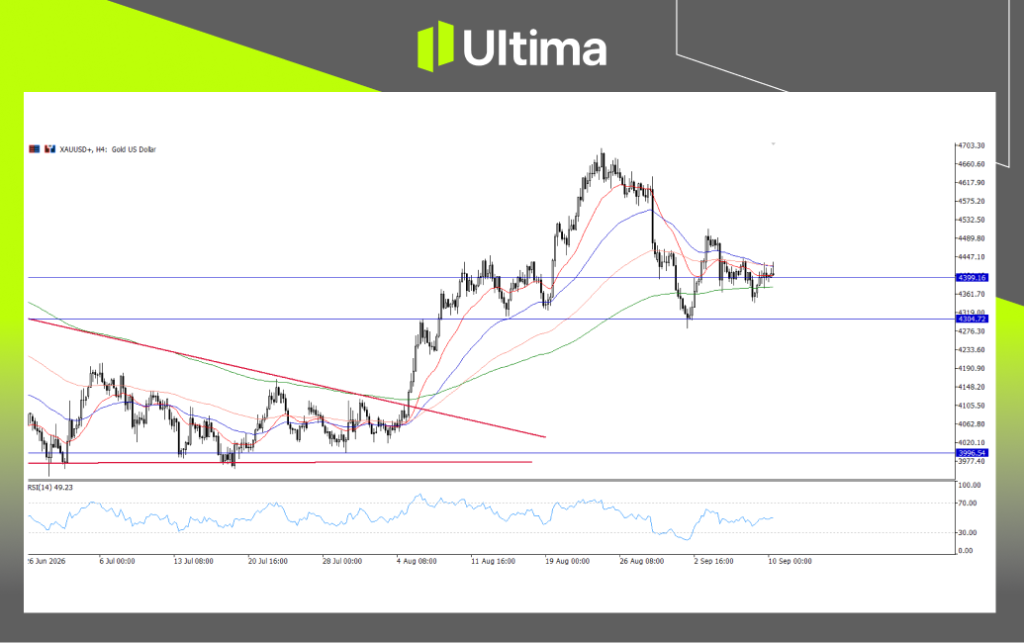
XAUUSD, H4 Chart | Ultima Markets MT5
Over the near term, gold remains in a bullish structure above the $4,300 – $4,400 support zone. This area now acts as the support floor to validate the broad bullish recovery over the long-term trend.
Theoretically and technically speaking, as long as the $4,300 – $4,400 level holds, the upward trajectory for gold remains intact.
Overall Outlook: If the macroeconomic catalysts—particularly Middle East tensions and debt anxieties—ignite the anticipated risk-aversion flows, a confirmed bounce from the current support base will quickly bring gold back into a solid uptrend.
Wait for the Market Major Move
In short, gold’s broader macro outlook is supported by three key drivers: Middle East tensions threatening energy-driven inflation, rising US debt risks pushing long-term yields higher, and lingering trade frictions adding extra market uncertainty.
On the technical side, gold’s strong bounce from the $4,000 region, its descending triangle breakout, and its return above the 200-day moving average near $4,300 provide a solid foundation for further upside.
Overall, gold has fundamentally and technically pointed to a bullish recovery setup, but still need to see upcoming price action and whether market catalyst could really kick in.
Disclaimer
Comments, news, research, analysis, price, and all information contained in the article only serve as general information for readers and do not suggest any advice. Ultima Markets has taken reasonable measures to provide up-to-date information, but cannot guarantee accuracy, and may modify without notice. Ultima Markets will not be responsible for any loss incurred due to the application of the information provided.
Thank you for visiting the Ultima Markets website. Please note that this website is intended for individuals residing in jurisdictions where access is permitted by law. Ultima and its affiliated entities do not operate in your home jurisdiction.
By clicking ‘Acknowledge’, you confirm that you are entering this website solely on your own initiative and not as a result of any specific marketing outreach. You wish to obtain information from this website based on reverse solicitation principles, in accordance with the applicable laws of your home jurisdiction.